While the monologues in the Gospel John often sound repetitious and circular, I describing them as 'spiraling.' It goes round and round, but progress to new insights is being made along the way. Check the color coding I've done at the bottom of the PDF to see what I mean.
Monday, April 19, 2021
John 10.11-18 Translations and notes (RCL Fourth Sunday of Easter)
Posted by
MGVHoffman
at
2:58 PM
0
comments
Labels: biblical resources, biblical studies, Gospel of John
Wednesday, April 14, 2021
Online and Free Bible Study Resources
- ONLINE BIBLE SITES which provide extra helps for English readers to study the underlying Greek and Hebrew
- *NET Bible: This is a highly recommended choice. It gives you access to the NET Bible notes which I recommend consulting. Use the Hebrew or Greek tab in the right column, and you will see how it highlights the matching English and Greek words. Double-click on a Greek/Hebrew word to get a rudimentary lexicon entry. Click on an English word in the NET to do an original language word search or open the Parallel tab on the left to see NET, NIV, NASB, ESV, NLT, MSG, NRSV, and KJV together.
- *STEP Bible from Tyndale (replaces Tyndale Tool Bar): Another outstanding site with both original language and many English version texts (NET, NIV, ESV, KJV…). Like the NET Bible Study Environment, it can highlight matching Greek/Hebrew//English words, and has links to many lexical resources.
- TheBible.org: Excellent site that is very nice for comparing original and translated versions with access to lexical resources. Many English versions including NRSV, NASB, ESV, KJV, NAB, NIV, NLT…
- Bible Web App: Less full featured, but it’s fast and includes the NET with all notes. Parallel highlighting of Greek/Hebrew//English with Strong’s lexical popups.
- OTHER ONLINE SITES primarily for English language study
- *YouVersion: The primary attraction of this
site is the abundance of Bibles it offers, both English (e.g., CEB, CEV,
CJB, ESV, GNB, HCSB, KJV, LEB, Message, NAB, NASB, NCV, NET, NIV, NKJV,
NLT, NRSV) and nearly countless non-English ones. For Greek, it includes SBL
GNT and Textus Receptus, and the Westminster Leningrad for the Hebrew.
Two texts can be set in parallel. There are also free apps for Android, iOS, and voice (Amazon Echo and Google Home).
- *BibleGateway: There are too many English (and it does include the NRSV), non-English, Greek, and Hebrew versions to list. If you want to compare English versions, you can see a verse in every version they offer with a single click. There are quite a few linked resources, but many need you to subscribe for $4 USD/month. If your main interest is in comparing English versions, this is your best option.
- FaithLife: This is the online site. Many original and modern language versions are available, but the best part is the connection with the FaithLife Study Bible.
- Bible Hub: A nice collection of resources.
The Atlas alone is quite helpful.
- FREE DOWNLOADABLE PROGRAMS and APPS if you don't already have Accordance, BibleWorks, or Logos
- *Logos Academic Basic: If you are a student, staff, or faculty person at an educational institution, this should be your first option. A Logos 9 Basic is also available for those outside educational institutions. Logos is also available as an app for Android or iPhone.
- *The Word: The Word is one of the first I recommend to people wanting a free program, since it is rather full featured program. It includes Greek / Hebrew. You can always buy some modules, e.g., NRSV, to expand its versatility. Among many non-English versions, free English versions include: Douay-Rheims, ERV, ESV, HCSB, KJV, Tanakh 1917, NET (but with limited notes), LEB. For Greek: LXX, SBL GNT, and other Greek text. For Hebrew: a tagged Hebrew Bible. Only runs on Windows or under Mac emulation.
- Olive Tree: This free Bible app is available for Windows, Mac, iPhone, iPad, Kindle, and Android. Once you get the app, check out the free resources. It includes SBL GNT and Hebrew Westminster Leningrad. For English, it includes many of the usual versions (KJV, NKJV, ESV, limited versions of HCSB and NET, Douay-Rheims, Tanakh 1917), but it does also offer the NIV. A number of useful study tools can also be added.
- BibleGateway: Similar to
the online version described above, the app is available for iPad iPhone, Android, and Kindle.There is also a voice app.
- e-Sword: The basic installation includes the KJV with Strong’s and its related lexicon along with a few other resources. Once installed, there are many other free Bibles and resources that can be added. Windows and Mac.
- LaParola: Does a nice job of creating concordance lists and working with text variants (Windows and Linux)
- FaithLife Study Bible: It's free and available for just about all platforms. It's a Logos product and uses their rather literally translated Lexham Bible. It comes from a conservative perspective, so you need some discernment, but many of its study features, especially the FaithLife Study Bible itself, can be helpful. (E.g., go to Phil 1.1 for The Life of Paul graphic.)
- *YouVersion: This app, available for just about every platform, includes over 1000 Bible versions. It is similar to its online version described above.
- Accordance Lite: This free version has limited resources, but it can give you an idea of the look and feel of the program.
- Since I have Accordance and Logos, I use their included apps most often on my phone. (I tend to use the Logos app most often on my Android phone.) I’ve noted a number of the programs above which have mobile editions, but for more information on mobile Bible apps, look HERE.
Posted by
MGVHoffman
at
9:22 PM
0
comments
Labels: android, apps, bible software, biblical resources, iOS
Tuesday, April 6, 2021
John 20.19-31 Translation and Commentary (RCL 2nd Sunday of Easter)
The Thomas story in John 20.19-31 occurs in each year of the Revised Common Lectionary since it specifically happens one week after Easter. Here are the kind of notes I have my students work through where they compare English translations as a way of figuring out which questions to ask of the Greek text. I've provided the texts with questions, but I've added my own answers. I've also provided my own translation which I think is one that is faithful to the Greek and reads well orally.
Posted by
MGVHoffman
at
10:48 AM
0
comments
Labels: biblical resources, biblical studies, Gospel of John
Tuesday, March 16, 2021
John 12.20-33 Translation and Commentary (RCL Fifth Sunday in Lent Year B)
Posted by
MGVHoffman
at
7:59 AM
0
comments
Labels: biblical resources, biblical studies, Gospel of John
Monday, March 8, 2021
John 3.14-21 Translation and Commentary (RCL Fourth Sunday in Lent Year B)
Here is the document with the translations and notes.
Here is my translation of John 3.1-21 to provide context.
Posted by
MGVHoffman
at
9:48 AM
0
comments
Labels: biblical resources, biblical studies, Gospel of John, greek
Sunday, February 28, 2021
John 2.13-22 Translation and Commentary (RCL Third Sunday in Lent Year B)
For the Greek and Gospels classes I teach, I have developed a way of working with a biblical passage that I have found helpful and that I encourage my students to use. I've been doing this for years, but I decided I might as well share it.
First, you will note that I work closely with the Greek text, but you don't need to know Greek. Instead, you'll see in the one handout that what I do is line up a variety of English translations from the 'literal' New American Standard Bible to a more 'dynamic, functional' one like the New Living Translation. I also usually include Peterson's The Message paraphrase since he really did work closely with the original Greek. I.e., by looking at the range of English translations, we have a better idea of what issues we should be looking at in the Greek text.
Second, when I use this in class, I usually have students work in groups addressing the questions that I pose to each verse. Some of the questions are Greek grammatical or lexical ones. Some of them draw attention to key words or concepts and encourage further word studies or research to understand what is going on. Some are translation matters which are highlighted by the comparison of English versions.
Third, I sometimes include my own translation in which I try to apply the results of my questions. You will see that my translations are not easily located on the literal > functional continuum. I tend to be closer to the literal end, but more importantly, I try to capture the emphases and distinctive elements of the Greek. The end result is something that ends up oriented to hearing in English what the Greek sounds like to me in terms of emphasis, word order, and syntax. This all reflects my conviction that these texts were originally heard by most people and not silently read to one's self. (This is especially true for the Gospel of Mark--which I regard to be closest to a transcription of an oral performance--and less true for Luke--which turns Mark into a literary work.)
Included here are links to my guide for the assigned text in the Revised Common Lectionary for the Third Sunday in Lent Year B. (March 7 in 2021) which is John 2.13-22.
If you want to try to do the exegetical work for yourself, HERE is the translation exercise.
If you want to see how I've answered my own questions, HERE is the key to the exercise.
If you just want to see my translation, HERE it is. You'll see that I have visually presented my translation to highlight the sense units and sentence structure. If I were going to perform this text, I would next go through and use color highlighting and bolding to note the themes and words that hold the text together. It's a great aid in memorization.
In any case, the resources are all in DOCX format, so they are easily editable. You are welcome to use them as you wish. (I would ask that if you share them, do keep my name and provide attribution.)
If you find this helpful, let me know, and I'll try to find a way to share these on a regular basis.

Posted by
MGVHoffman
at
11:50 PM
0
comments
Labels: biblical resources, biblical studies, Gospel of John, greek
Saturday, February 13, 2021
Using Accordance and Logos to Search the LXX and the Greek NT Simultaneously
ACCORDANCE
I composed a guide for my students on how to use Accordance Bible software to search across both the LXX and the Greek NT simultaneously. It's part of an exercise on searching for the phrase καὶ ἐγένετο ἐν... to show how this translation of a Hebrew idiom is used to make a NT text sound more 'biblisch.'
The PDF provides some commentary on the LXX texts in Accordance and then a step by step guide to setting things up in Accordance, conducting the search, and analyzing the results.
LOGOS
The procedure is somewhat simpler in Logos, and to replicate what I did with Accordance, the graphic above shows what to do using a Bible search and a combined Greek LXX & NT LogosMorph text. I could have added more parallels (includes the NETS), and Logos' "Analysis" provides some powerful ways to look more deeply into the results. In particular, it offers a "Next Context" which is helpful for studying the idiom further. Where Accordance is able to graph the hits across both the LXX and GNT on a single chart, I have not been able to find a way to do so in Logos. (Let me know if there is a way!)
Posted by
MGVHoffman
at
6:39 PM
0
comments
Labels: accordance, logos
Wednesday, February 3, 2021
Pergamon Digital Map
![]() |
| https://geoserver.dainst.org/maps/5548/view |
The publication of the new archaeological map of Pergamon is an important milestone in the study of the ancient metropolis. For the first time since 1973 a new cartographic basis for the ancient city of Pergamon is available. The new map represents all known archaeological remains.
Viewer has options for details, labels (English, German, Turkish), and backgrounds, all in outstanding detail. Further, clicking on sites provides links out to further resources such as iDAI.gazetteer and the iDAI.objects arachne site which has more information and photos. You can spend a lot of time poking around all that there is to see here.
Posted by
MGVHoffman
at
8:16 PM
0
comments
Labels: archaeology, bible photos, biblical mapping, geomapping
Wednesday, November 25, 2020
Unfolding the Earth
I came across this on Twitter by Nico Belmonte who does all sorts of interesting stuff with Data Visualization, Computer Graphics, Computational Design, Mathematical Art and Digital Fabrication.
Lots of options to 'unfold' the earth and see it in various perspectives. Have fun!
Posted by
MGVHoffman
at
10:52 AM
0
comments
Labels: geomapping
Friday, November 13, 2020
Chronologies, Genealogies, Maps: Online Resources from Ian Mladjov
- Chronologies
- Rulers of Egypt: chronology 1540-310 BC
- Rulers of Israel and Judah: chronology 1030-586 BC
- Rulers of Judaea (Hasmoneans and Herodians): chronology 166 BC-AD 92
- Genealogies
- The kings of Israel and Judah c. 1030-586 BC
- The Hasmonian and Herodian rulers of Judaea (detailed genealogy)
- Roman emperors 30 BC-AD 457
- Maps
- The Ancient Near East c. 1350 BC (the World of the Amarna Letters)
- The Ancient Near East c. 1250 BC (the World of Rameses II and the International System of the Late Bronze Age)
- Anatolia c. 1300 BC (the Hittite Empire and its dependencies)
- Mesopotamia c. 1200 BC (Babylonia and Assyria)
- The Sea Peoples in the Eastern Mediterranean c. 1200 BC (compare to the Returns from Troy map below)
- Israel and Judah c. 880 BC (the fragmentation of the United Monarchy according to the Old Testament)
- Macedon and Alexander's Conquests in 323 BC
- The Kingdom of the Hasmoneans and its dissolution c. 40 BC
The resources are of very high quality, and the maps are particularly detailed. You will note that the names on the resources follow standard transliteration practice rather than privileging Latinized and Anglicized versions. It's still easy enough to figure out persons and places.
Here is what Mladjov says about the maps.
The historical maps in this page are for the most part versions of some of the maps I have prepared for teaching purposes in my various courses. The level of detail and accuracy in any one map depends on the author's perceived necessities and priorities, source materials, and personal level of expertise in each particular case. Inevitably, as all too common with historical maps, many of these maps are (or started out) based on pre-existing versions from a variety of sources; I have attempted to investigate and verify points of doubt or discord wherever possible. Occasionally existing maps are revised to reflect additions or corrections, and new maps are added to this page. Given proper attribution, these maps may be used freely for non-commercial educational purposes.
Note that they are freely available for non-commercial educational use!
Thanks to Mladjov for sharing these fine resources. (BTW, I'm unable to find out much about the author except that graduate work was/is being done at University of Michigan, and there were teaching positions held at Bowling Green and Drexel.)
Posted by
MGVHoffman
at
2:13 PM
0
comments
Labels: biblical mapping, biblical resources, online resources
Saturday, October 17, 2020
State of the Bible Software Market
I can confirm that in my situation (United Lutheran Seminary), we have gone from encouraging Bible software to requiring it. We are using the Accordance Greek & Hebrew Discover which we can get at an institutional discount, though I still use BibleWorks (!) and Logos for certain tasks. It's always a trick getting everyone up to speed using the software, but I have managed to do so, even in a fully online setting during this pandemic times.
I'm on the board of 1517 Media (Fortress Press, AugsburgFortress, Broadleaf), and I'm not divulging any secrets by reporting that hardcopy book sales have been remarkably strong for 1517 and similar publishers. (Congregational resources have taken a hit with so many churches no longer meeting physically, however.) Do people getting tired of looking at screens and Zooming all the time and want the comfort of holding a book in their hands? Whatever the case, I know my students will not give up their Bible software once they see how useful it is. And when it's available across many platforms including their phones, it does become not just useful but essential.
Posted by
MGVHoffman
at
3:18 PM
0
comments
Labels: bible software
Wednesday, October 7, 2020
Patristic Text Archive now online
![]() |
| P T A |
The Patristic Text Archive is now online! It's still just in a beta version and available authors is limited (only ten now), but still, this looks to be a great resource to bookmark. Also note that there are limited texts for the authors that are available, e.g., two for Origen and three for Eusebius, but they are not the works that are easily available otherwise. Text are provided in the original Greek (or Latin or Syriac), and some are also available in translation (mainly German). In any case, check it out.
HT: Roger Pearse
Posted by
MGVHoffman
at
10:02 PM
0
comments
Labels: online resources
Saturday, September 19, 2020
Faithlife / Logos acquires Wordsearch Bible software
This is kind of a big deal... Faithlife / Logos announced that they are acquiring the Wordsearch Bible software. Wordsearch has been around a long time. I did have an account with them and a number of titles that I didn't have in any of my other programs. For users like me who had both programs, Logos is automatically transferring all Wordsearch titles over to Logos for free. (Check the FAQ for details.) Excellent! I'm glad that Wordsearch chose to go this route which both preserves my resources and means I have one less interface to remember how to navigate. LifeWay, Wordsearch's parent company, is still active, and I'm guessing this was a prudent business decision to keep from investing in a product that was competing with the likes of Logos and Accordance. (And it sounds like Accordance plans to reach out in some way to Wordsearch users.)
Update: Check out Darryl Burling's video summary HERE
Update 2: Accordance has now announced a crossover package for Wordsearch users.
Posted by
MGVHoffman
at
12:01 PM
0
comments
Labels: bible software, logos
Thursday, September 17, 2020
Oxford Archaeology Image Database online
It's always nice to have access to vetted photos which can be used for free in educational work. The Oxford Archaeology Image Database does just that for sites and artifacts related to Mesopotamia. Use of the photographs is encouraged with proper attribution. A bit about the site:
The OAID was established in June 2015 by Tim Clayden (Wolfson College, Oxford) with support from the Lorne Thyssen Research Fund for Ancient World Topics. Its initial aim was to preserve and make available to as wide an audience and user group as possible images of archaeological sites recorded on slide film. The concern being that as the slide films age and decay the quality of the images deteriorates. In many cases these images are a unique record of the sites at a particular time and once the slide is lost, so too is the image and the information it contains. More recent events in Iraq and Syria have urged a more pressing need to record and preserve the record of some archaeological sites. For that reason the project has expanded to include images in whatever format they are available.
There is a site list, but you can also search for site for features or artifacts from museums. (E.g., Ishtar or ziggurat or jar)
Now you know.
HT: AWOL
Posted by
MGVHoffman
at
10:23 PM
0
comments
Labels: bible photos, pictures.photos
Saturday, July 18, 2020
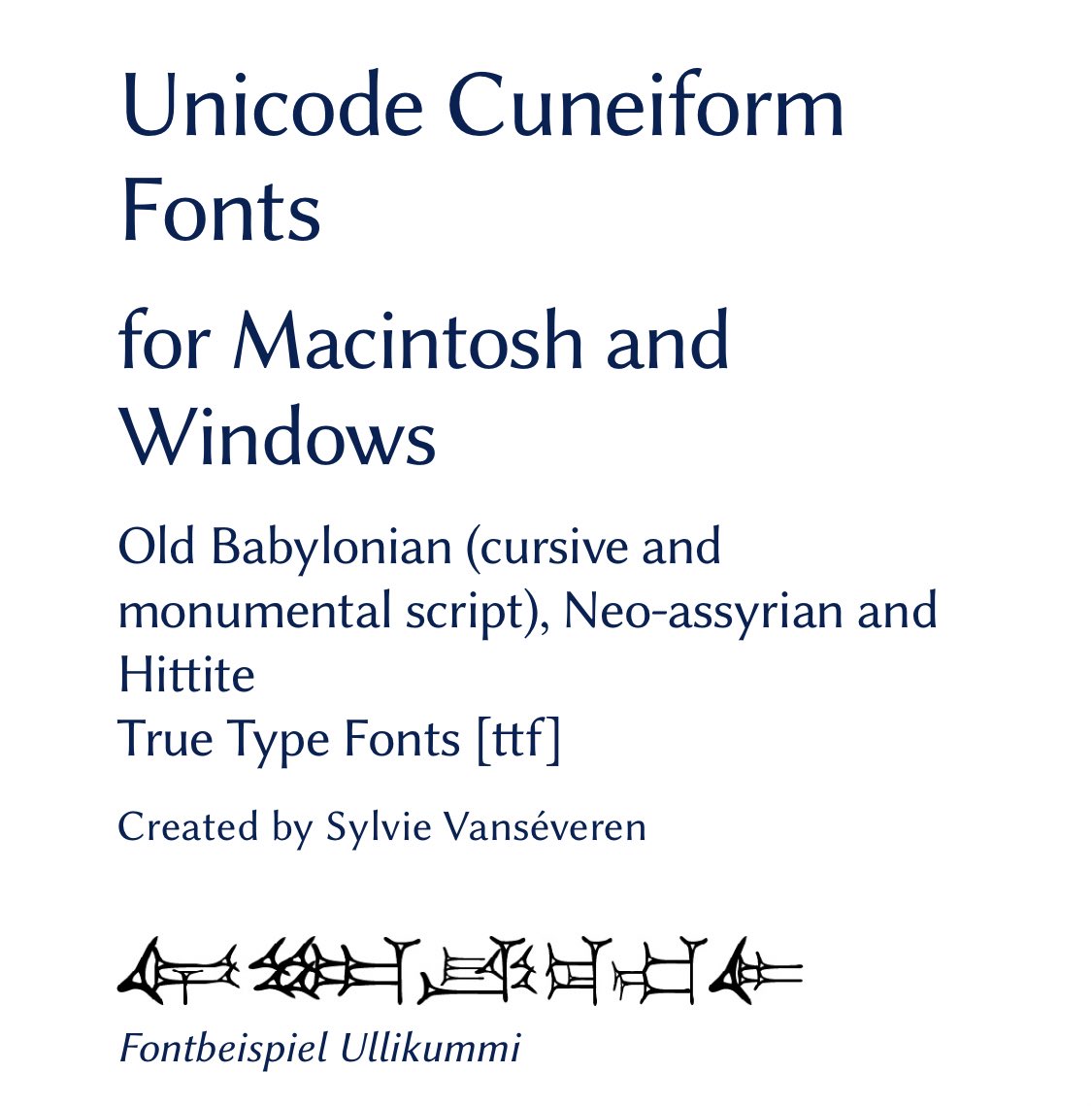
Unicode Cuneiform Fonts!
HERE is the link to the info and download page.
HT: Dr. Moudhy Al-Rashid on Twitter who also notes:
If your computer or keyboard make downloading a font impossible, and your cuneiform is too rusty for Cuneify, you can copy and paste signs from free online sources. For example, HERE is a basic and searchable list of Neo-Assyrian cuneiform signs.
Posted by
MGVHoffman
at
7:37 PM
0
comments
Tuesday, June 30, 2020
Blog to check: J. David Stark | Hone Your Craft, Enrich Your Life - Gospel or gospel?
For biblical scholars, “craft honing” includes things likeHe regularly posts items on resources, writing, and technical skills. For example, his latest one is on a topic that addresses an issue I regularly have to ponder: A Simple Guide to When You Need to Capitalize “Gospel(s)”
- Productivity habits and practices to help you do biblical studies as a skilled “knowledge worker,”
- Tools and resources to make your life and work in biblical studies easier, more focused, and more fruitful,
- How to use technology to get what you need done rather than spending hours frustrated over minutiae when you could have invested that time and effort elsewhere, and
- Strategies for ensuring your life is full both in your work and beyond.
Check it out and poke around his blog.
Posted by
MGVHoffman
at
11:01 PM
0
comments
Labels: online resources
Tuesday, June 23, 2020
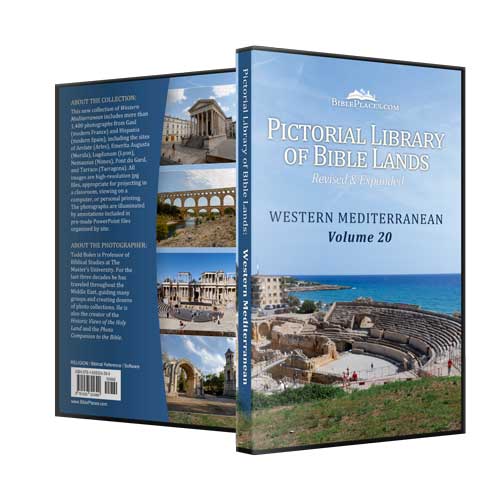
Western Mediterranean: New Volume in Pictorial Library of the Bible Lands Series
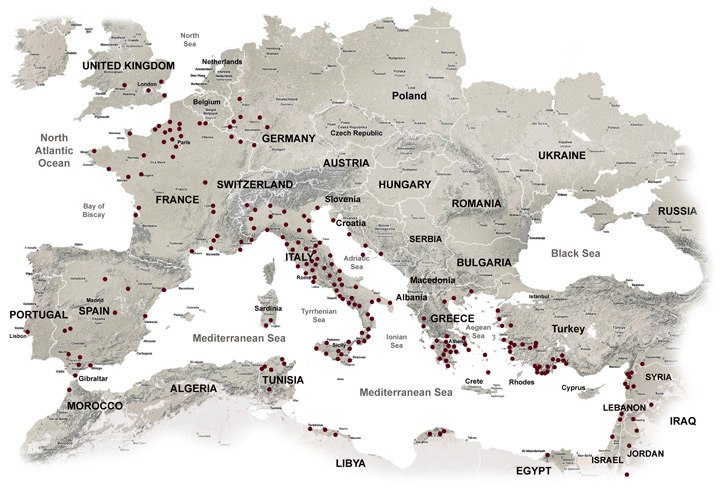
BiblePlaces has released a new volume (#20!) on the Western Mediterranean in their Pictorial Library of the Bible Lands series. This one includes sites in Gaul (France) and Hispania (France).
All images are high-resolution jpg files (2400 x 1600). Ideal for projecting in a classroom, viewing on a monitor or printing. Also included on each DVD are pre-made PowerPoint presentations for each region (with photograph annotations), maps for site identification, and an image index.These have been excellent and well-organized resources with outstanding photography. As for this volume, be sure to read Todd Bolen's description in the June 2020 newsletter HERE. Whether or not Paul ever made it to Spain, the main takeaway is that their are Roman structures built in the same time period as the New Testament that are much better preserved in Gaul and Hispania. You can get a much better idea of what things actually looked like. At the newsletter link, you can find a link to download a PowerPoint with an East/West comparison of similar structures that is very helpful.
Posted by
MGVHoffman
at
11:03 AM
0
comments
Labels: bible photos
Wednesday, June 10, 2020
Synagogues of Israel Interactive Map
HT: Philip Murray on FB, Nerdy Bible Backgrounds and Bible Geography Majors group.
Posted by
MGVHoffman
at
12:21 AM
0
comments
Labels: biblical mapping, google maps
Friday, June 5, 2020
Word & World Issue on Jerusalem
A journal of theology whose readers are concerned with Christian ministry in and for the world. A glance at our articles and our issue themes will show how we propose to bring Christian thinking to the questions posed by life in our world today.The latest Spring 2020 issue focuses on "Jerusalem" from a variety of perspectives. An article I wrote--Jesus and Jerusalem and the "Things That Make for Peace"--is one of the articles. It's a review of all of Jesus' activity in Jerusalem reported by each of the Gospels, especially his final week there. There are certainly uncertainties about some of the details, but I believe it's a helpful overview. It's a free PDF to read, so I hope you check it out. I'm happy to address questions and comments here.
Posted by
MGVHoffman
at
9:33 AM
0
comments
Labels: online resources
Friday, May 1, 2020
The Ancient Theater Archive
I stumbled upon another fantastic site, The Ancient Theater Archive, and it has excellent information about Greek and Roman theaters throughout the Roman Empire. The map is clickable to zoom in to areas, and then the sites each have their own page with a considerable amount of detail and history. Here, for example, is the famous Ephesus theater:
There is a link to a architectural plan view, and clicking on More... will give you a thorough description of the theater's history.
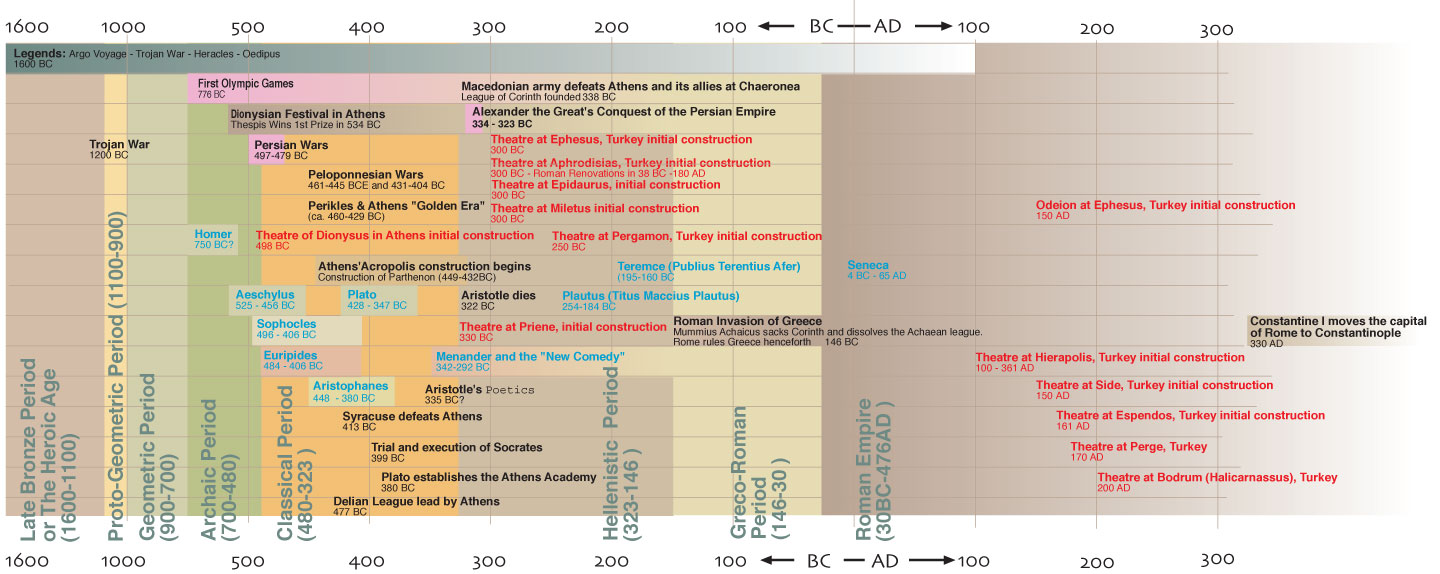
Also check out the timeline of theater constructions provided:
And then be sure to look at the Greek and Roman Theatre Specifications table.
Here's the site info so e can be grateful to: © 2003–2019 Thomas G. Hines, Whitman College Department of Theatre (retired).
Posted by
MGVHoffman
at
12:24 PM
0
comments
Labels: geomapping, online resources