Kevin Woodruff has posted an updated (and relocated) Bible Study Resources Guide. It's a good page to bookmark!
Friday, October 20, 2017
Bible Study Resources Guide
Kevin Woodruff has posted an updated (and relocated) Bible Study Resources Guide. It's a good page to bookmark!
Posted by
MGVHoffman
at
12:48 AM
2
comments
Labels: biblical resources
Sunday, September 3, 2017
Best Free Bible Resources: Online Sites and Downloadable Apps/Programs
I have previously commented on some of the main free and trial versions of Bible software available. I have now compiled an updated and more extensive list of the free Bible resources with which I am familiar. Some of these are capable of original language Hebrew and Greek work, but they are primarily oriented to English Bibles. (Some do feature an extensive collection of non-English Bibles.) Most of them offer basic search features, and some offer a variety of supporting resources. I like those that allow for viewing texts in parallel. If you know even a little Hebrew or Greek, the ones with sympathetic highlighting (Bible Web App, Lumina Bible) are especially helpful.
STEP Bible (Scripture Tools for Every Person): "Trustworthy Bible study software designed specifically for the disadvantaged world." It is, however, available for anyone to use and has a nice interface with a collection of English (e.g., ESV, JPS, KJV, LEB, NASB, NET, NIV), Hebrew, Greek, Latin, Coptic, Syriac, and more texts. Depending on the version, notes, vocabulary and interlinear options are possible.
Olive Tree: This free Bible app is available for Windows, Mac, iPhone, iPad, Kindle, and Android. Once you get the app, check out the free resources. It includes SBL GNT and Hebrew Westminster Leningrad. For English, it includes many of the usual versions (KJV, NKJV, ESV, limited versions of HCSB and NET, Douay-Rheims, Tanakh 1917), but it does also offer the NIV. A number of useful study tools can also be added.
Posted by
MGVHoffman
at
11:04 PM
6
comments
Labels: accordance, bible software, bibleworks, logos, online bible
Monday, June 26, 2017
Matthew 10.34: "Do not suppose that I came to *?* peace on earth...
The Gospel reading in church this morning included Matthew 10.34, and I was following along in the Greek on my phone. (Logos app) It's one of the 'harder' sayings of Jesus, since it stands in such contrast to "Blessed are the peacemakers" of Matthew 5.19:
Μὴ νομίσητε ὅτι ἦλθον βαλεῖν εἰρήνην ἐπὶ τὴν γῆν· οὐκ ἦλθον βαλεῖν εἰρήνην ἀλλὰ μάχαιραν.I had never noticed it before, but the verb I left blank in my translation is βάλλω. That seemed odd to me, since the word usually has a more vigorous force of throwing, casting, or sending. The usual translation in English versions of "bring peace" seems a weak translation of the verb. What exactly is going on in the Greek here, and how might one go about figuring the implications? Here are some things one could do:
Do not suppose that I came to _____ peace on earth. I did not come to ____ peace but a sword.
- Check other translations and see if anyone else has struggled with the verb. (I.e., check both a range of translations and any text footnotes.)
- If one wants to be thorough, one might also check non-English versions. The Latin Vulgate is often worth consulting.
- Another interesting version to check is the Syriac Peshitta which might highlight issues in the underlying Aramaic.
- Is "bring peace" a common English idiom? Or is it 'biblisch'? (One way to try to determine this is to do a Google search on the particular word or phrase. Are most of the results citations from the biblical text? One can also try running a Google Ngram search which can sometimes provide insight about a word or phrase's use over time.)
- Check the range of meanings of the verb βάλλω. (I.e, consult lexicons, especially one like BDAG.)
- Since this is a synoptic text, is there a parallel in one of the other gospels? If so, does it have the same wording?
- Are there other instances where εἰρήνη is the object of βάλλω? (Running a search like this might also highlight instances when the NT is citing or alluding to a phrase from the LXX.)
- More broadly, how does Greek usually talk about peace / εἰρήνη when it is the object of a verb? I.e., what verbs are used that take εἰρήνη as an object? (Here is where syntactical searches can be particularly helpful.)
- Finally, one can always consult commentaries to see how other scholars have worked with the issue. When dealing with translation matters, I especially like to check the United Bible Society's series of Translator's Handbooks.
- Note: The UBS series for the NT is complete. Most of the OT and Deuterocanonical books are also done, and apparently they are still woking on completing the set.
- You can still obtain these in hardcopy reasonably priced starting at this link HERE. Prices for used or new copies are all over the place on Amazon and ebay.
- Accordance offers the whole NT collection for $200. It doesn't appear that they offer the OT books. Logos offers the NT set for $250 and the available OT and Apocrypha volumes for $252. You can also purchase individual volumes for ~$7 each.
I have and use nearly a complete collection of BibleWorks (BW) resources in addition to their very full standard package. I have a Gold level collection of Logos resources to which I've added many secondary resources over the years. I now also am starting to use Accordance's Greek and Hebrew Discoverer collection which is good set of resources for seminarians but for which I would need to add quite a few other works to bring it up to the level of resources I have in BibleWorks or Logos.
SO... using my available resources, how did I address the tasks, and what did I discover?
- Translations: Each program offers a variety of English translations (and more can always be purchased), but BibleWorks includes the most with its base package. Whatever is used, it's quickly apparent that almost all English versions use "bring peace." BUT:
- The KJV and Douay-Rheims (which is translating the Vulgate) both use "send peace." I.e., they are treating the βάλλω literally. (And the Vulgate does use a form of mitto which is also a literal translation of βάλλω.)
- Not surprisingly, the literal-minded New American Standard adds a footnote indicating, "Lit cast." The New English Translation (NET)--another version I ask my students to consult--also adds a footnote: Grk "cast." For βάλλω (ballo) in the sense of causing a state or condition, see L&N 13.14. The L&N is a reference to the Louw-Nida lexicon, another very helpful resource.
- BTW, the Syriac uses דארמא which is also a literal translation of βάλλω.
- Is "bring peace" an English idiom? A Google search shows that it is used in many secular contexts. (E.g., the president says, "I can bring peace to the Middle East...") The biblical references do show up early in the lists, so perhaps this is an instance where the biblical phrasing has entered the mainstream language. (Though in this case, it would not be coming from the KJV.)
- Lexical meaning of βάλλω: I have Louw-Nida in all my packages, and I have BDAG in BW and Logos. As indicated in the NET Bible note, L&N 13.14 refers to "causing a state or condition," but Matthew 10.34 is the only instance cited for this meaning. As for BDAG, both my BW and Logos provide the necessary info, but Logos does have a more attractive presentation and has hover-over popups for abbreviations used. As a 4th option for βάλλω, like L&N, it offers "to bring about a change in state or condition." BDAG, however, offers some supporting parallels, specifically from Josephus (Ant. 1.98 where Noah prays after the flood that God would not again ὀργὴν ἐπὶ τὴν γῆν βαλεῖν = cast wrath upon the earth), from the Gospel of James 7.3 (where God 'cast/showed' favor upon Mary - χάριν ἐπʼ αὐτήν), and Revelation 2.4 (where Balak 'casts/places' a stumbling block before people). I find the Josephus and GospJms ones most interesting, because they both use the preposition ἐπι in the clause as in Mt 10.34. While this lexical work does provide some context for Mt 10.34, I'm still not sure it fully explains the force of the verb. If anything, perhaps something like, "I did not come to cause peace on earth..." would be a better translation.
- Synoptic parallel? Any of BW, Logos, or Accordance can quickly call up synoptic parallels. Interestingly, Luke 12.51 records:
- δοκεῖτε ὅτι εἰρήνην παρεγενόμην δοῦναι ἐν τῇ γῇ; οὐχί, λέγω ὑμῖν, ἀλλ᾽ ἢ διαμερισμόν.
- Do you think that I arrived to give peace in the earth/land? No, I tell you, but rather division."
The English versions vary in using give, grant, or bring peace. In any case, as we shall see shortly, using δίδωμι is a more common verb used to describe how peace does or does not come. It also highlights that Matthew's use of βάλλω is indeed peculiar. - Other instances where εἰρήνη is the object of βάλλω? The brute force method of addressing this question with Bible software is to run a search of all instances of βάλλω where εἰρήνη is in the accusative case. This one is easy since Matthew 10.34 is the only instance.
- More broadly, how does Greek usually talk about peace / εἰρήνη when it is the object of a verb? This is a more difficult search.
- Using BW, I need to use the straightforward method of any verb with the accusative of ειρηνη which looks like this when searching the morphological database (BGM):
.*@v* ειρηνη@να*
This searches both the LXX and NT, and I get 653 hits in 114 verses, and almost all of them are false hits since εἰρήνη is not necessarily the object of βάλλω. It is no fun trying to work through all those hits. BW does not include a syntactical database, but the next best thing is their Key Word in Context (KWIC) tool. Right-click on εἰρήνη and choose the KWIC option, and a customizable table appears. Based on the lemma εἰρήνη, one can find out how frequently other words within X words appear before and after it. To get closest to the results I want, I chose 5 words on either side. Further (using an undocumented feature I discovered), one can use the morphological text of the LXX and NT (=BGM) but define an inflected form of the lemma, in this instance, ειρηνη@na* to find only the accusative forms. This certainly does not provide conclusive results since it's only looking at proximity of 5 words and not grammatical relationships. It does show, however, with just a bit of checking, that ποιέω / make peace is a common expression. The next most common is δίδωμι / give peace which is the expression used in Luke 12.51. It would still take some time to work through the KWIC table, but it would give a good background... and also confirm the uniqueness of βάλλω εἰρήνην. - A much better way of finding the answer to my question is to use syntactically tagged text like I have in Logos and run a clause search looking for any verb accompanied by an object clause that has the lemma εἰρήνη. I will have to run two searches--one for the LXX and one for the NT--but the search terms are easy to construct:
verb-lemma:ANY object-lemma:εἰρήνη
Logos offers ways to view both the verses or an analysis of the texts. With the latter, I can specify how to organize the analysis and choosing Verb Lemma gives me the results I want to see. Again, I would want to confirm everything, but a cursory look shows that the data is pretty good. I now get 23 results in the LXX and 29 results in the NT. The most common verbs that control ειρηνη as an object are (LXX + NT): - ποιεω (9+2) 11
- διδωμι (2+3) 5
- ἐχω (1+3) 4
- διωκω (0+3) 3
- βαλλω (0+2) 2 < and these are the two instances in Mt 10.34
- γινωσκω (0+2) 2
- εὐαγγελιζω (0+2) 2
- I don't have the Accordance syntactical database, and it looks like they only have it available for the NT and the Hebrew OT but not the LXX. (If an Accordance user with that resource has it and wants to report here on the results, I'd appreciate it.)
- Commentaries? Scholars struggle to explain the saying in light of Jesus' promotion of peace elsewhere in the gospels. The UBS Translator's Handbook on Matthew did point me to the 1995 Anchor Bible commentary on Matthew by Albright and Mann who translate Matthew 10.34 as:
Do not think that I have come to impose peace on earth by force; I have come neither to impose peace, nor yet to make war. I have come to divide..."
This translation is taking the βαλλω seriously, but unfortunately they support their translation by appealing to a reconstructed Aramaic original (which is not reflected in the Syriac) and a oral confusion of a "neither ... nor" construction in the Aramaic which resulted in the faulty Greek rendering of ἀλλα / but in a "not this... but this" construction.
Posted by
MGVHoffman
at
2:38 AM
2
comments
Labels: accordance, bible software, bibleworks, logos
Thursday, June 22, 2017
Athens, Greece now in 3D on Google Earth and GE Quiz Maker
As I noted in April, Google is discontinuing support for the desktop version, but the web app still does not have all the capabilities of the desktop version. For example, in the desktop version, you can view 3D reconstructions (not 3D imagery) like this view of Jerusalem.
So if you have not yet done so, get the desktop version.
HT: Google Earth blog
Speaking of Google Earth, you may want to try out the GE Quiz Maker that allows you to create geographic quizzes and fly you around the world. Links on that page will get you to a sample quiz and to the template you can use to create your own quizzes.
Posted by
MGVHoffman
at
1:41 AM
2
comments
Labels: biblical mapping, google maps, googleearth
Thursday, June 8, 2017
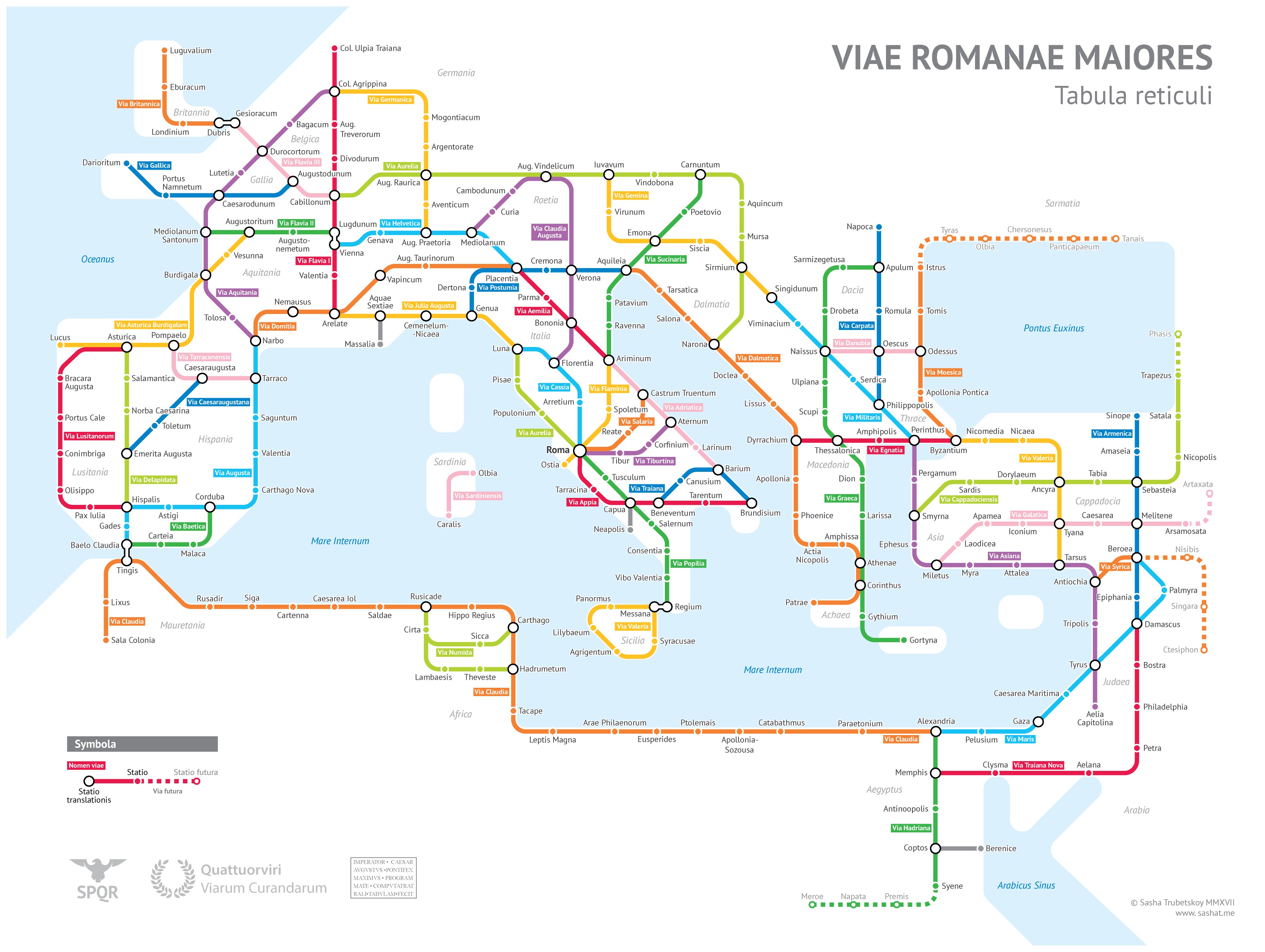
Roman Road system portrayed as a subway map
![]() |
| https://sashamaps.net/docs/maps/roman-roads-original/ |
Creating this required far more research than I had expected—there is not a single consistent source that was particularly good for this. Huge shoutout to: Stanford’s ORBIS model, The Pelagios Project, and the Antonine Itinerary.That's a great use of those online mapping resources! (You will certainly want to check out both the ORBIS for ancient travel planning and the Pelagios site for a very detailed map.) He had to make a number of compromises, and he did not include sea routes, but it still provides a fun and helpful overview. (The map supplied on the site is quite large, but Trubetskoy can send a more detailed version via a Paypal link.)
I'm mindful of the many limitations that a stylized map like this entails, but as a New Testament scholar, I do have a few quibbles.
- I'm among those who do not think that the Via Maris referred to the Egypt-Damascus route which is better known as the Great Trunk Road. (Cf. the edits I made to the Via Maris entry on Wikipedia under "Name and Controversy.") Trubetskoy does include a note about the naming in her comments.
- Technically, Jerusalem was not renamed Aelia Capitolina until 135 CE or so by Hadrian.
- Pergamum sort of appears on the map as a coastal city though it was ~15 miles / 25 km inland.
- I believe that Antigonia / Alexandria Troas was an important seaport worth including.
- I think "Via Cappadociensis" is one of the names he created. At least part of it is what was the ancient Persian Royal Road.
- No room on the map for Neapolis or Philippi...
- Thessalonica is displayed quite far inland rather than as a port city.
HT: Tim Bahula who HTs Open Culture
Posted by
MGVHoffman
at
5:47 PM
0
comments
Labels: biblical mapping
Bible Mapper Video Tutorials
Bible Mapper is the ideal tool for researching and creating maps of the biblical world. Virtually every known location and geographic feature in the Bible can be displayed and fully customized quickly and easily, making it a snap to create stunning maps adapted to your particular needs.Version 3 is free to download and is fully functional. To get the improvements in version 5, the cost is $37, though you can download and try it for free (just not save any maps you create).
Some time ago I made some introductory video tutorials, but it was back in the day of WMV files. It was pointed out to me that those don't play well on a Mac, so I've just uploaded them all to YouTube. There are 7 short videos in all you can check out here:
Bible Mapper YouTube Video Tutorials Playlist
If you do purchase Bible Mapper 5, Barrett does provide email support, but you may also want to check out the user wiki I created here.
Posted by
MGVHoffman
at
4:46 PM
0
comments
Labels: bible mapper, biblical mapping
Friday, May 12, 2017
Bible Study Resources Listing (Kevin Woodruff)
UPDATE: As Woodruff notes in the comments, the page has been relocated and updated and reorganized. I changed the link in the post. (The old page is still out on archive.org here.)Thanks, Kevin!
Posted by
MGVHoffman
at
12:22 AM
1 comments
Labels: online resources
Saturday, April 22, 2017
New Google Earth Web Version Released :(
![]() |
| Rome in Google Earth Web |
Posted by
MGVHoffman
at
1:07 AM
1 comments
Labels: geomapping, google maps, googleearth
Biblical Studies in the Digital Age: Know your MSI from your RTI
| Views of an inscription from Amman in flat light > Reflectance Transformation Imaging; diffuse gain > Specular enhancement |
Posted by
MGVHoffman
at
12:26 AM
0
comments
Labels: archaeology
Saturday, April 15, 2017
BibleWorks 10 Update: Free Eerdmans Dictionary of the Bible
BibleWorks has just announced a free update for BW10 users to add Eerdmans Dictionary of the Bible (EDB, 2000) to their BW library. Further, they added a new Dictionary tab in the Analysis Window so that as you move your mouse over English text, if there is a matching entry in the dictionary, it will immediately appear.
![]() |
| Here you can see how the Dictionary tab works as you mouse over a word in an English version text. Do note that the linking is a bit indiscriminate. Mousing over "not" in an English text will bring up the entry for "Not my people" |
- Nearly 5,000 entries explain every book, person, place, significant event, and distinctive term or expression found in the Bible
- Written by nearly 600 respected authorities in the field of biblical scholarship
- Includes 112 informative charts and photos and a 12-page section of color maps
- Supplementary aids include lists of abbreviations, pronunciation guide, transliteration key, and concise bibliographies to guide further research
- Entries cover the Deuterocanonicals as well as the Hebrew and New Testament scriptures
- Based on the New Revised Standard version of the Bible, with attention given to alternate readings in other major translations
Posted by
MGVHoffman
at
1:19 AM
1 comments
Labels: bibleworks, bibleworks modules
Tuesday, April 11, 2017
Updates at Syri.ac: NT Apocrypha & New Bibliographical System
First, we are excited to introduce a new page at http://syri.ac devoted to the study of the New Testament Apocrypha which can be found at http://syri.ac/ntapocrypha. This is a companion page to the Old Testament Pseudepigrapha page we announced several weeks ago. Hundreds of ancient documents have been have been classified over time under the rubric of 'New Testament Apocrypha' (or sometimes 'New Testament Pseudegpigrapha') — not even including the number of works found in the Nag Hammadi codices. These apocyrphal texts were produced over centuries and by diverse communities. The tenuous connections between them, as a genre or corpus, are either their attribution to apostlic authors or, in terms of content, the 'hidden' stories they reveal about Jesus, the Apostles, Mary, and other New Testement figures. These works, ranging from the 2nd century CE (Protoevangelium of James) to the Islamic period (Gospel of the 12 Apostles), represent both the inventiveness of late antique Christian writers and the popularity of such stories among their readers. Originally written for the most part in Greek or Latin, they were soon translated into Syriac, Armenian, Coptic, Georgian, etc., but many original compositions of Christian apocrypha, or variants on older stories, also originated in these languages. Later Syriac writers (such as Mor Jacob of Sarug among others) were not only familiar with the traditions found in these books, but the apocryphal stories inform the exegetical worldview of several different works in Syriac.
We based the page on the masterful research of M. Geerard, *Clavis Apocryphorum Novi Testamenti* (Turnhout: Brepols, 1992). The page provides information about all published resources on New Testament Apocrypha in Syriac, Arabic, and Garshuni. Many of the resources collected by Geerard are available in the public domain. Thus, we have expanded his work by giving hyperlinks directly to the pages of those resources which are publicly available.
We hope that this page will be a valuable resource for those seeking authoritative publications on NT Apocrypha in Syriac and Arabic. Furthermore, we hope that http://syri.ac can encourage new research on this rich literary tradition and foster fruitful dialogue between scholars working on Judaism, Biblical Studies, Quranic Studies, and the Syriac and Arabic literary traditions.
Second, we have developed a site-wide Bibliography, which can be found at http://syri.ac/bibliography. We are steadily converting all of our pages to this new system. Eventually, all of the individual citations we make throughout the site will have a place in the the site-wide bibliography. The goal is that the user not only has access to important resources on individual pages, but now can also easily access the full bibliographic record for the same important resources. Each bibliographic entry is able
to be recombinable in meaningful ways (e.g. the Works Cited list http://syri.ac/bibliography?f%5Bkeyword%5D=14 on the NT Apocrypha page). The site-wide bibliography is able to be searched, filtered, and sorted by multiple keywords. ...
The pages that have been converted to the new system are fully Zotero-aware, as are the individual bibliographical entries in the site-wide bibliography. If you use Zotero, you can now easily “suck down” any of the references we cite into your own Zotero library. Each entry can also be downloaded as a BibTex, RIS, or MARC file type. Several pages already make use of the new bibliographical system ... soon all the pages on the siteSyri.ac is a great resource and reference, and these new enhancements only enhance its offering. I'm a big fan of Zotero, and the new Zotero-aware entries are appreciated.
will make use of the new system and their citations will be added to the site-wide bibliography.
We think the new Bibliography offers a major new increase in functionality for users of the site. The Bibliography is not designed to replace the immense work done at the Comprehensive Bibliography on Syriac Christianity http://www.csc.org.il/db/db.aspx?db=SB, but has been built to present all materials cited on syri.ac. As always, we have tried to preserve the immediacy of links to publicly available works available on Archive.org http://archive.org/, which has been a hallmark of the site since the beginning.
Posted by
MGVHoffman
at
10:49 AM
1 comments
Labels: online resources, Syriac
Sunday, April 9, 2017
Blended Digital Gospel Harmony of Palm Sunday Account at OpenBible.info
![]() |
| Blog article link |
Smith notes the limitations of print harmonies and has produced a digital one that is interactive and gives readers greater clarity regarding where material is being derived. It also lets readers choose to prioritize one gospel if they choose.
In his initial work, Smith shows what the Palm Sunday / Entry into Jerusalem text might look like. The reader has the option of picking one of the four Gospels as the base which is highlighted in red. He notes that it was surprisingly time-consuming to construct a single passage like this, so don't expect a full Gospel any time soon.
I think the most helpful thing about such a tool is that a person can more quickly compare two Gospels and simply note what turns to red or black. One can quickly see that differences, at least in this account, are minimal between Matthew, Mark, and Luke, but switching to John as the base makes a considerable difference.
HERE is the blog article and HERE is a page where you can play with the blended digital Gospel harmony yourself.
Posted by
MGVHoffman
at
9:27 PM
0
comments
Labels: online resources, openbible
Thursday, March 30, 2017
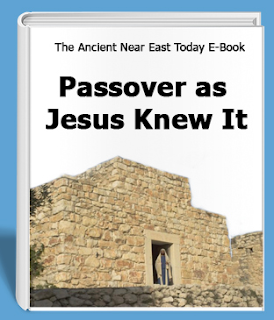
Free e-book: Passover as Jesus Knew It
![]() |
| http://asorblog.org/free-ebook-anet/#get-your-free-copy-of-the-ancient-near-east-today-special-edition-passover-as-jesus-knew-it |
- "Jesus' Passover" by James F. Strange
- "Passover as Jesus Knew It" by Helen K. Bond
- "The Last Passover of Jesus" by James H. Charlesworth
- "The Passover and Jesus" by Adela Yarbo Collins
- "Did Jesus Celebrate Passover in Sepphoris" by Eric M. Meyers
Posted by
MGVHoffman
at
3:17 PM
0
comments
Labels: online books
Thursday, March 16, 2017
Bible Versions in Bible Apps
- Accordance (iOS only for now; UPDATE 01.2018: A beta version of Android is in final stages and should be released soon)
- BibleGateway
- Logos
- MySword
- Olive Tree
- YouVersion
- Available Bible versions is only one reason whether to choose an app or not. If there is one particular version you must have, then this list may help.
- I do not do serious exegetical work on my Android smartphone. For a mobile app, I'm more interested in how quickly it works, and whether I can do some quick checking on a translation or the original text. I.e., I do include the availability of Greek and Hebrew texts. Bonus points for those that include Strong's or other tagging which might allow you to connect with a Hebrew/Greek lexicon.
- If you own desktop versions of any of these programs--especially Accordance, Logos, or Olive Tree--your decision will be easier since most everything you own in the desktop version is available in the app.
- Also note the costs. I've indicated which versions come with the free Bible app and which are available for purchase.
- I've also noted where some versions must be streamed and are not able to be downloaded and used offline. (I'm supposing this is due to licensing issues.)
- This chart is not nearly comprehensive. There are many other English versions available for each program. I've just listed ones in light of my previous post.
- I also have not included the multitude of non-English versions avaialable, usually for free. BibleGateway, MySword, and YouVersion are especially notable in this regard.
- I'll say it again: the number of Bible versions is only one aspect of a decision about which app to use. Consider what other aspects are important to you: notetaking, highlighting, parallel texts, text comparison, etc.
![]() | ||
| click to enlarge or go HERE for full downloadable spreadsheet |
- Each one of these apps is capable enough and might serve your needs.
- Since I have a large Logos library, I'm using the Logos app most frequently. I could do full research if I wanted since I have access to critical editions of texts and the major lexicons and dictionaries like the Anchor Yale one. (I'm guessing Accordance users like their related app, but until an Android version is released I can't say much about it.)
- If, however, you are just looking for a free Bible app with access to some good Bible versions, I think MySword or YouVersion are probably your best choices.
- If you want to be able to consult Greek and Hebrew (including the LXX) and perhaps want to see Greek/English in parallel or even have an interlinear Bible, then MySword can do the job.
Posted by
MGVHoffman
at
11:40 PM
0
comments